

DWDM

(Dense Wavelength Division Multiplexing)

Flexible and Future-Proof Open Line Systems for DCI and Metro Networks Supporting IP-over-DWDM
DWDM is an optical transport technology that enables multiple services to be carried simultaneously over a single pair of fiber, allowing organizations to expand capacity while reducing the need for additional fiber infrastructure.

Cost-Efficient, High-Performance Optical Networks

Compact Footprint, Lower Power Consumption

Optimize data center real estate and reduce operational expenditures (OpEx) with highly efficient, high-density hardware.

Future-Proof
Networking

Seamlessly scale your infrastructure to meet the multi-terabit bandwidth demands driven by 5G, Cloud Services, IoT, and Webscale applications.

Flexible Management Solutions

Gain granular control over your network topology with intelligent, software-defined management architectures.
What is DWDM?
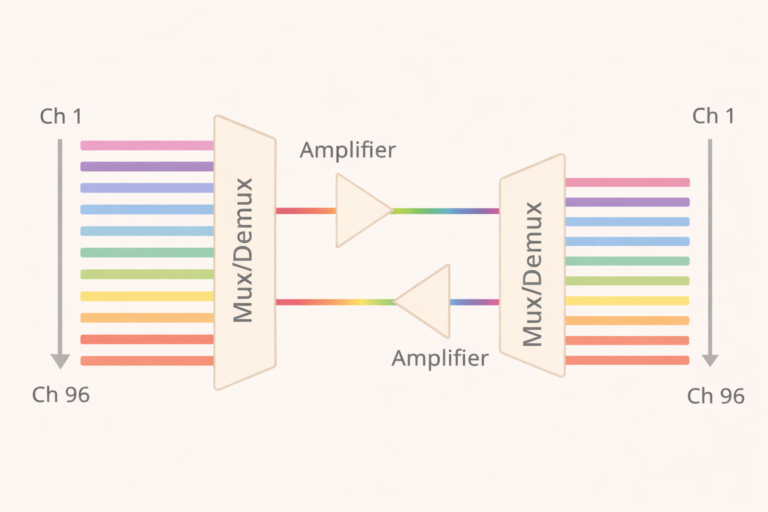
Dense Wavelength Division Multiplexing (DWDM) is an advanced optical transport technology designed to maximize fiber network capacity. By transmitting multiple independent data channels simultaneously over a single pair of optical fibers—each utilizing a unique wavelength of light—DWDM delivers high-bandwidth services over long distances without requiring costly signal regeneration.
DWDM Network Diagram
Architectural Overview: Where DWDM Fits in the OSI Model
To understand how DWDM optimizes data throughput, it is essential to view its integration across the baseline layers of network infrastructure:
  • Layer 0 (Photonic Layer):
    The fundamental domain of DWDM operation. At this layer, the system multiplexes multiple optical signals (channels) onto a single fiber string using distinct light wavelengths.
  • Layer 1 (Physical Layer):
    The foundation where electrical signals convert to optical signals for physical media transmission. DWDM reinforces Layer 1 by providing a robust, high-capacity optical transport infrastructure.

Key Components of an Enterprise DWDM Optical System

Modern DWDM frameworks rely on key hardware components working in tandem to deliver flawless, long-haul connectivity:

Transponders & Muxponders

Convert incoming client signals (such as Ethernet, SDH/SONET, or Fibre Channel) into highly precise, ITU-compliant optical wavelengths.

Multiplexers / Demultiplexers (MUX/DEMUX)

Aggregate multiple optical wavelengths onto a single fiber pair at the source, and accurately separate them back into distinct channels at the receiving destination.

Optical Amplifiers
(EDFA / Raman Amplifiers)

Boost optical signals directly within the photonic layer, extending transmission distances over hundreds of kilometers without needing electrical conversion.

Optical Add-Drop Multiplexers
(OADM / ROADM)

Facilitate the extraction or addition of specific wavelengths at intermediate network nodes. Reconfigurable OADMs (ROADMs) provide dynamic, software-controlled wavelength routing for total agility.

DWDM vs. CWDM:

Maximizing Your Existing Infrastructure

While Coarse Wavelength Division Multiplexing (CWDM) provides a cost-effective choice for short- to medium-distance applications (supporting up to 18 channels spaced 20 nm apart), it hits limitations beyond 40 km due to attenuation and a lack of optical amplification support.

The Solution: DWDM over CWDM

By overlaying high-bandwidth DWDM wavelengths directly onto your existing CWDM infrastructure, service providers can scale network capacity exponentially.
This hybrid approach eliminates the need to replace or modify underlying fiber layouts, drastically reducing Total Cost of Ownership (TCO).
TCO Reduction


Eliminate unnecessary capital expenditure (CapEx) by extracting maximum value from current physical assets.

Strategic Fiber Leasing


Optimize operational overhead through cost-efficient fiber leasing architectures.

Next-Gen Security


Secure your data transport layers using advanced Quantum Key Distribution (QKD) or robust, line-rate AES-256 GCM encryption.
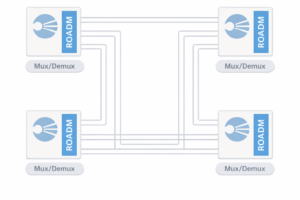
A ROADM network is a flexible optical transport architecture that enables remote, dynamic routing of individual wavelengths across a DWDM system—allowing operators to add, drop, or pass through channels without manual intervention, improving scalability and reducing operational complexity.
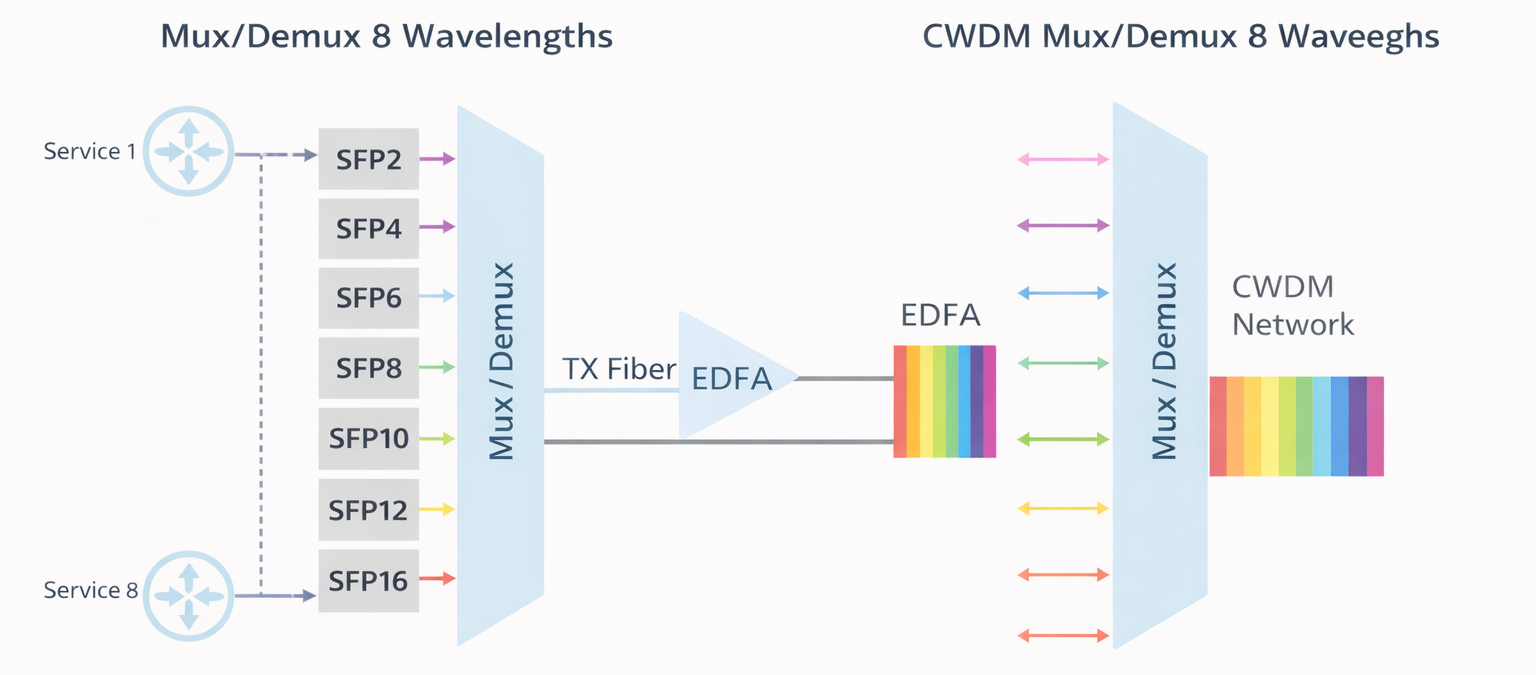
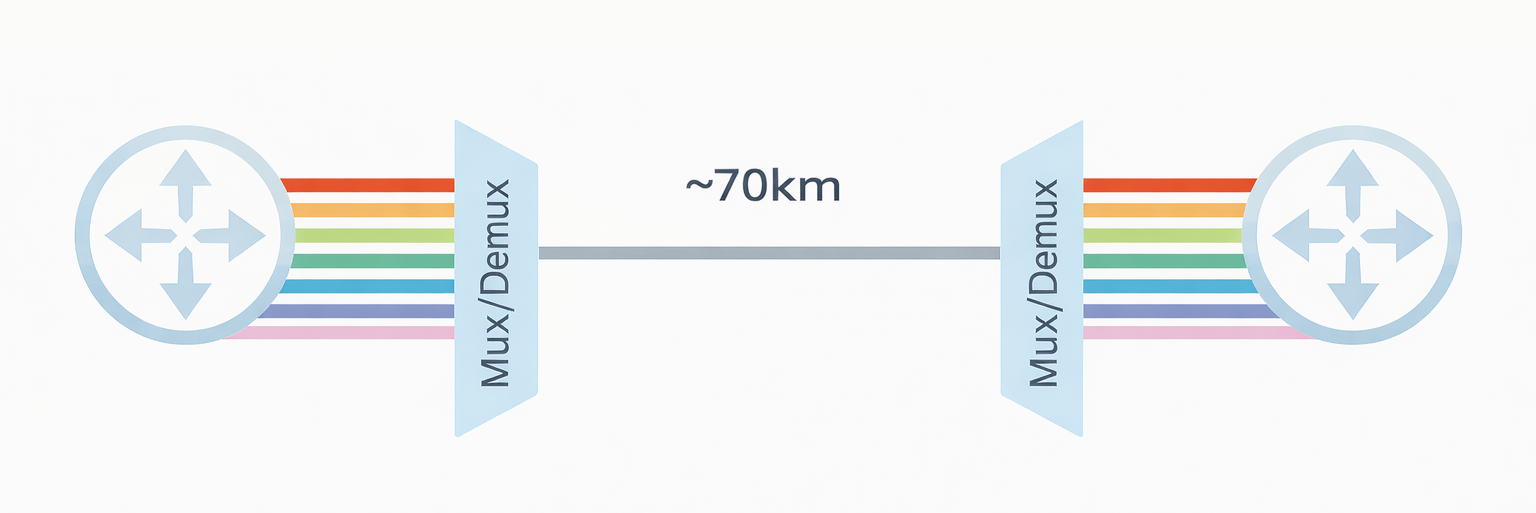
Coarse Wavelength Division Multiplexing (CWDM) supports up to 18 wavelength channels on a single fiber. These channels are spaced 20 nm apart, which simplifies the optics and reduces cost. CWDM is typically used for short‑ to medium‑distance applications, offering a cost‑efficient solution for links up to 70 km. However, for distances between 40 and 70 km, CWDM systems often operate with a reduced channel count commonly eight channels—due to increased attenuation and the lack of optical amplification.
DWDM over CWDM enables service providers to expand the capacity of existing CWDM networks by adding higher‑bandwidth DWDM wavelengths without replacing or modifying the underlying fiber infrastructure
Expansion DWDM Capacity over CWDM
When evaluating an upgrade to IP over DWDM at 100G or 400G, it’s important to consider not only the initial investment but the total cost of ownership (TCO).

Many optical networking vendors impose additional charges for expanding, extending, or modifying DWDM links over time, which can significantly increase long‑term operational costs.
XoDWDM
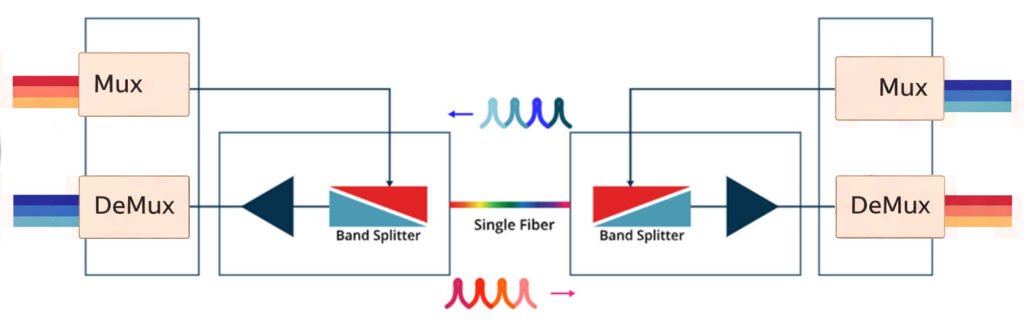
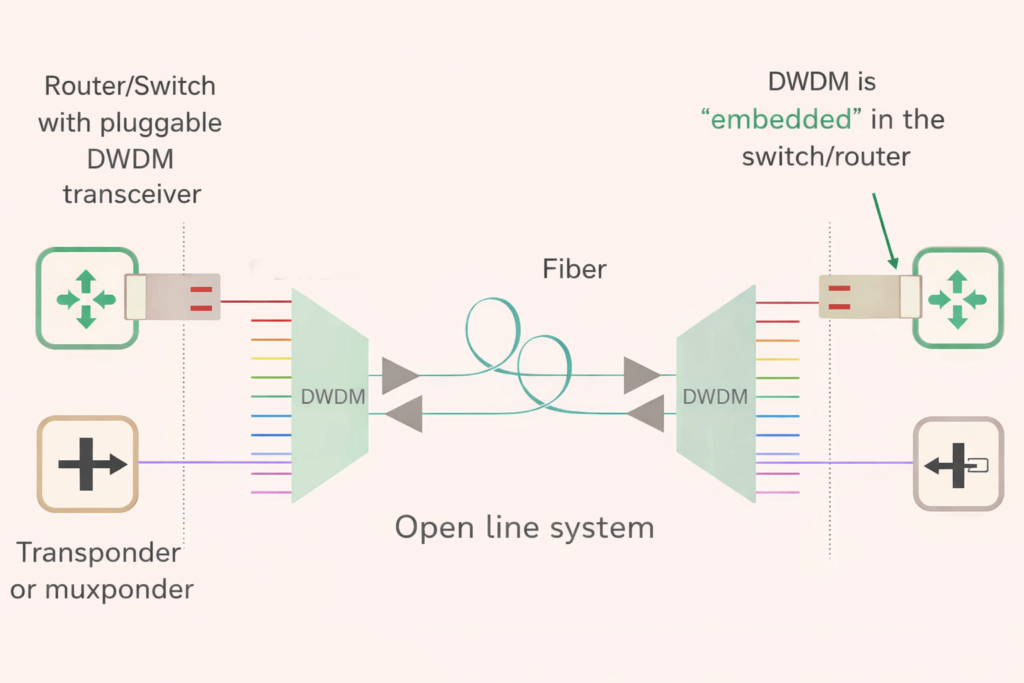
Single‑fiber DWDM solutions reduce fiber consumption by half, delivering significant economic benefits for carriers, dark‑fiber providers, and enterprises. In environments where fiber leasing costs are high, taxes apply to lit fiber, or fiber availability is limited, single‑fiber operation provides a highly efficient and cost‑effective alternative.
Single Fiber Solution with Amplifier
Fiber‑optic communication was once considered inherently secure and resistant to tapping. However, recent years have demonstrated that with readily available tools, it is now possible to intercept optical signals and extract data from fiber cables. This shift highlights the growing need for robust physical‑layer security measures to protect sensitive information traveling across optical networks.

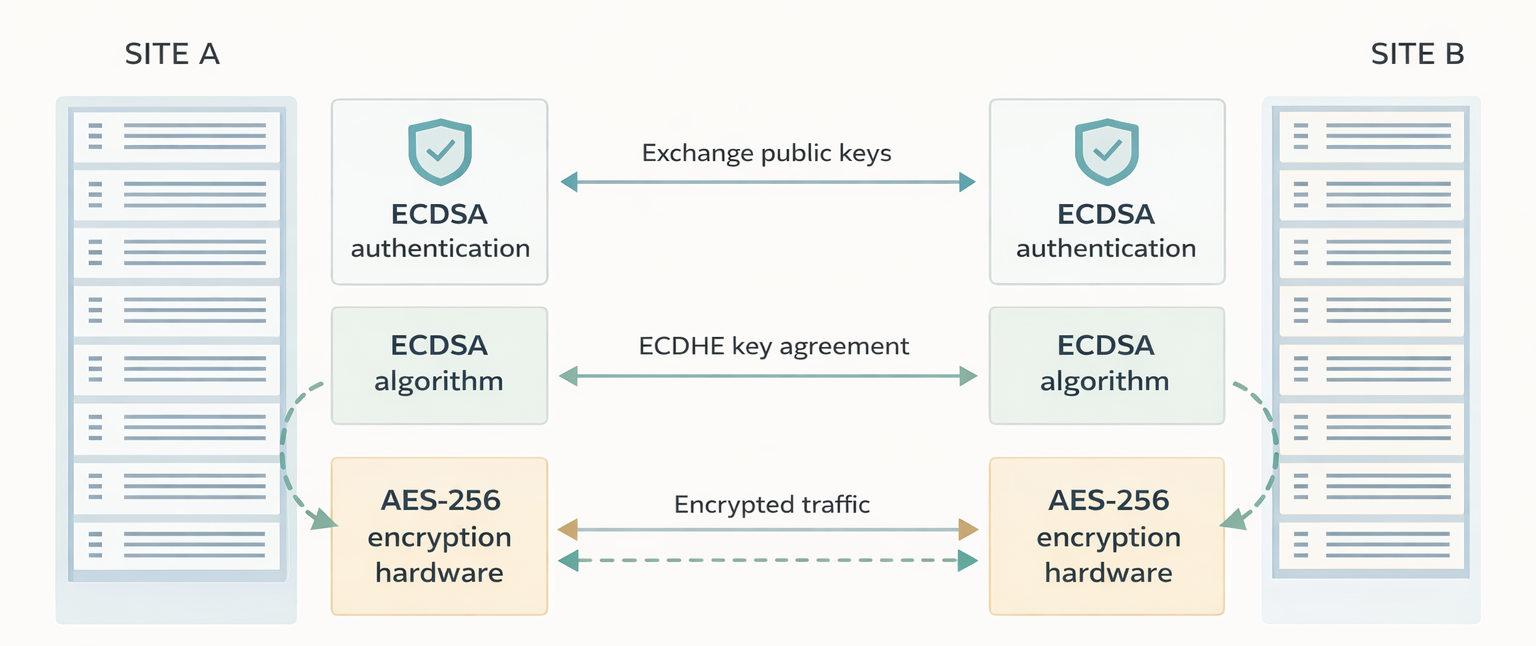
Layer 1 Encryption

Layer‑1 security focuses on protecting data directly at the optical transport layer, where traffic travels over fiber.
This layer is often overlooked, yet it is one of the most vulnerable points in a network because fiber routes and physical access conditions are not always known or controlled.

Quantum Key Distribution (QKD) and AES‑256 encryption both aim to secure communications, but they do so in fundamentally different ways.

Purely Open Optical Networking:
Freedom, Flexibility, and Standards

Purely Open Optical Networking is our commitment to an optical ecosystem built on freedom, flexibility, and transparency. Instead of locking customers into proprietary hardware, restrictive licenses, or closed management systems, we deliver an architecture that is fully standards‑based and interoperable across vendors. This empowers operators to design, scale, and evolve their networks on their own terms.

Zero Vendor Lock‑In


Our open optical architecture ensures complete freedom of choice. You are never tied to a single supplier, giving you full control over network evolution, procurement, and long‑term strategy.

Multi‑Vendor Interoperability


Designed for openness and flexibility, our solutions interoperate seamlessly across equipment from multiple vendors. This enables scalable, future‑proof deployments without proprietary constraints.

Vendor-Neutral
Architecture

Seamlessly integrate with existing LO-L3 equipment.


Protocol-Agnostic
Transport


Supports mix of protocols: e.g. Ethernet(1 GbE-800GbE), Fibre Channel, OTN, SDI, with ZRIZR+ and OpenROADM optics, and alien wavelengths.

Standards-Based
Design


Fully ITU-T compliant: DWDM (G.694.1), OTN (G.709), Open ROADM (G.872), Flexgrid, and more.

No Hidden
Licenses

All features, wavelengths, ports, and operational modes are open and included-no gating or proprietary restrictions.

API & Orchestration
Ready

SNMP, CLI, MIBs, and REST APIs for integration into any NMS, OSS/BSS, or SDN controller.

Flexible Uplink & Modulationdards-Based Design

Supports open modulation formats and uplinks — optimized for performance, dispersion, reach and cost-efficiency across diverse topologies.

Alien Wavelength Support


We support the integration of third‑party wavelengths into existing line systems, allowing you to maximize fiber capacity and extend the life of your current infrastructure without disruptive upgrades.

Standards‑Based Architecture


Every component is built on globally recognized industry standards, ensuring reliability, compatibility, and long‑term sustainability across diverse optical environments.

No Licensing Fees


Our transparent, license‑free model eliminates recurring software charges and feature‑unlock fees. This reduces total cost of ownership and simplifies operations, allowing you to scale without financial friction.

Data Center Fabric

Fiber‑optic communication was once considered inherently secure and resistant to tapping. However, recent years have demonstrated that with readily available tools, it is now possible to intercept optical signals and extract data from fiber cables. This shift highlights the growing need for robust physical‑layer security measures to protect sensitive information traveling across optical networks.

Data Center Gateways: Enabling Seamless Cloud Connectivity

Data centers are the foundation of today’s digital economy. As organizations expand across regions and markets, their data centers no longer operate as standalone facilities.

They now function as part of a highly interconnected global ecosystem designed to support the increasing demands of customers and users.

This shift has made resilient, high‑performance network connectivity essential. Seamless communication and efficient data transfer between sites directly influence the performance, security, and availability of mission‑critical applications and services.
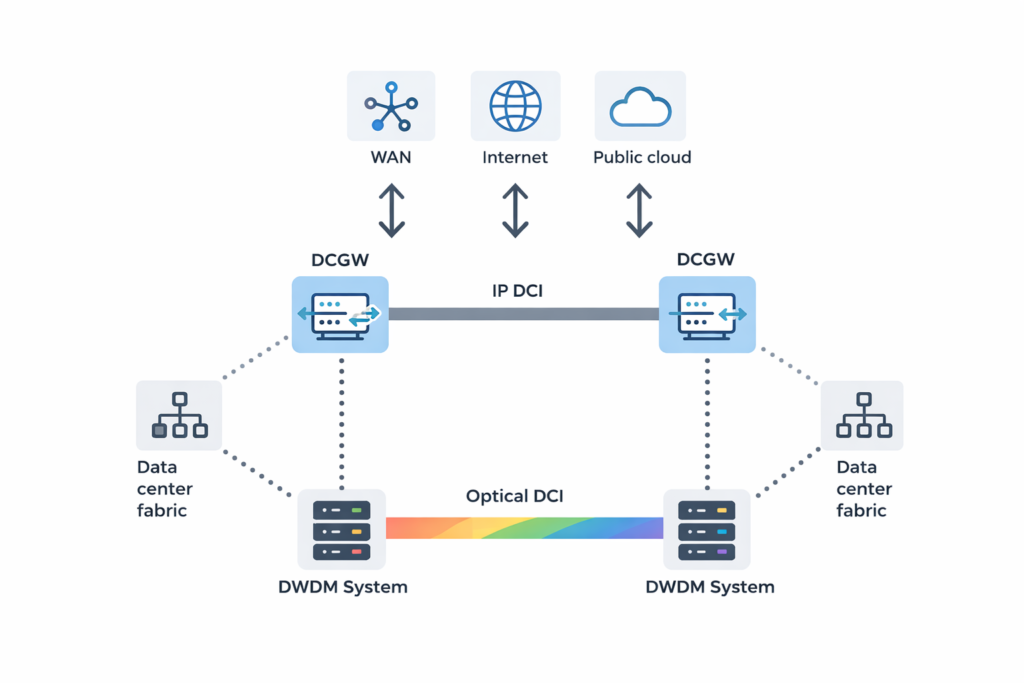
Data Center Gateways (DCGWs) have emerged as a key solution to these growing connectivity requirements. Acting as scalable and reliable entry and exit points for data traffic, DCGWs enable organizations to interconnect data center fabrics—spanning private clouds, public clouds, and hybrid environments—while preserving the integrity and availability of their applications and data.

As artificial intelligence (AI) becomes integral to business operations, the role of the DCGW becomes even more critical. AI workloads demand exceptional performance, massive scale, and uncompromising reliability. With widespread AI adoption, data center networks will be pushed to new limits, making robust, scalable connectivity a strategic necessity for organizations worldwide.

Strategic Global Collaborations

GOIP proudly partners with global technology pioneers to deliver cutting-edge, carrier-grade solutions. Our closely integrated ecosystem ensures your business benefits from the latest innovations, elite hardware reliability, and elite performance.

Ready to Elevate Your Global Infrastructure?

Consult with Our Enterprise Network Engineers

Maximize your network throughput, mitigate cybersecurity vulnerabilities, and seamlessly scale your international operations with GOIP’s tailored B2B connectivity. Schedule a comprehensive architecture review with our technical experts today.
Please enable JavaScript in your browser to complete this form.
Agree