


In today’s digital-first world, network latency—often called ‘lag’—is more than a minor annoyance; it’s a critical business metric.
This delay between a user’s request and a service’s response can directly impact revenue, productivity, and customer satisfaction, especially in a cloud environment.
Whether it’s an end-user accessing a SaaS application or one cloud instance communicating with another in a multi-cloud setup, latency has a real and measurable cost.
Understanding it is the first step to mitigation.
This delay between a user’s request and a service’s response can directly impact revenue, productivity, and customer satisfaction, especially in a cloud environment.
Whether it’s an end-user accessing a SaaS application or one cloud instance communicating with another in a multi-cloud setup, latency has a real and measurable cost.
Understanding it is the first step to mitigation.
What is Network Latency?
At its core, network latency is the delay caused by the physical distance data must travel and the number of obstacles it encounters.
These include:
Geographic Distance: The literal length of the network cable.
Network Hops: Each router (or “hop”) a data packet passes through adds milliseconds.
Hardware/Software Transitions: Movements between physical and virtualized environments create processing delays.
The result? Longer distances and more layers mean higher latency, slower response times, and a poorer user experience.
Key Insight: While often confused, latency and bandwidth are different.
High latency can cripple even the fastest (high-bandwidth) connection, leading to unpredictable performance and a high failure rate.
These include:
Geographic Distance: The literal length of the network cable.
Network Hops: Each router (or “hop”) a data packet passes through adds milliseconds.
Hardware/Software Transitions: Movements between physical and virtualized environments create processing delays.
The result? Longer distances and more layers mean higher latency, slower response times, and a poorer user experience.
Key Insight: While often confused, latency and bandwidth are different.
High latency can cripple even the fastest (high-bandwidth) connection, leading to unpredictable performance and a high failure rate.
How to Measure Network Latency
Two simple metrics are essential for measuring network performance:
Time to First Byte (TTFB):
The time it takes for the first byte of data to leave the server and reach the client.
This includes server processing time and is a key metric for web performance.
Round Trip Time (RTT):
The total time it takes for a client to send a request and receive a response from the server.
This is commonly measured using a ping command.
Time to First Byte (TTFB):
The time it takes for the first byte of data to leave the server and reach the client.
This includes server processing time and is a key metric for web performance.
Round Trip Time (RTT):
The total time it takes for a client to send a request and receive a response from the server.
This is commonly measured using a ping command.
The Business Impact of High Latency
Modern network complexity exacerbates latency issues. The shift to “work from anywhere,” reliance on wireless networks, and the explosion of IoT devices have created a scattered, unpredictable network landscape.
Coupled with widespread cloud and multi-cloud adoption, businesses are navigating a complex web of providers, each with different SLAs.
This complexity makes managing latency for business-critical applications a significant challenge.
Coupled with widespread cloud and multi-cloud adoption, businesses are navigating a complex web of providers, each with different SLAs.
This complexity makes managing latency for business-critical applications a significant challenge.
Real-World Consequences:
Internal Collaboration:
High-latency access to cloud-based communications like Zoom or Microsoft Teams results in choppy, frustrating video calls.
Customer Experience: For cloud gaming or streaming services, high latency means stuttering video and sluggish controls, causing users to churn.
Financial Loss:
For high-frequency trading, a millisecond of lag can mean millions in lost opportunity, as the entire business model relies on first-mover advantage.
High-latency access to cloud-based communications like Zoom or Microsoft Teams results in choppy, frustrating video calls.
Customer Experience: For cloud gaming or streaming services, high latency means stuttering video and sluggish controls, causing users to churn.
Financial Loss:
For high-frequency trading, a millisecond of lag can mean millions in lost opportunity, as the entire business model relies on first-mover advantage.
Why Cloud Services Magnify Latency Problems
Cloud latency issues are amplified for specific reasons:
Data Center Location:
The physical distance to your cloud provider’s data center directly impacts latency. You must know their location to assess the number of router hops required.
The Multi-Cloud Challenge:
Data exchanges between different cloud providers (e.g., AWS to Google Cloud) across the public internet suffer from significantly higher latency, which can increase costs or create vendor lock-in.
Virtualization Overhead:
In cloud infrastructure, multiple software layers and virtual machines (VMs) on separate networks can introduce unpredictable packet delays.
Which Applications Require Low Latency?
While all applications benefit from low latency, it is non-negotiable for:
Streaming Analytics:
Real-time betting, auctions, and multiplayer gaming. Lag has immediate financial consequences.
Real-Time Data Management:
Enterprise apps that process live data from multiple sources (databases, sensors, SaaS).
API Integration:
Systems that halt processing until an API responds (e.g., ticket booking apps). Network latency directly creates application bottlenecks.
Video-Enabled Remote Operations:
Remote surgery, drone piloting, and search-and-rescue. Here, high latency is a matter of life and death.
Streaming Analytics:
Real-time betting, auctions, and multiplayer gaming. Lag has immediate financial consequences.
Real-Time Data Management:
Enterprise apps that process live data from multiple sources (databases, sensors, SaaS).
API Integration:
Systems that halt processing until an API responds (e.g., ticket booking apps). Network latency directly creates application bottlenecks.
Video-Enabled Remote Operations:
Remote surgery, drone piloting, and search-and-rescue. Here, high latency is a matter of life and death.
How to Resolve Latency Issues
The public internet, with its best-effort, unpredictable nature, is the primary source of latency problems. It offers no guarantees for latency, jitter, or network pathing.
The solution? A private, direct connection.
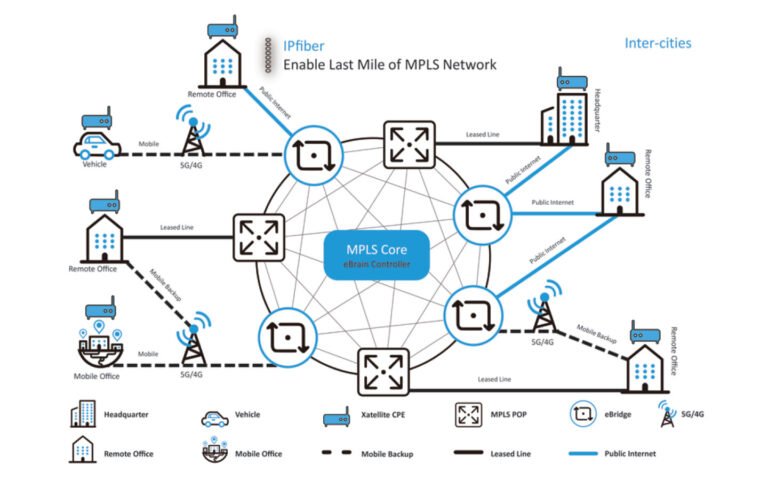
A private network provides a dedicated, low-latency pathway to your cloud assets, bypassing the public internet’s congestion and fluctuations.
This is essential for latency-sensitive workloads and provides a more stable and secure connection.
This is essential for latency-sensitive workloads and provides a more stable and secure connection.
Benefits of a Private Network Solution:
Reduced Latency:
Direct routes mean fewer hops and faster data transfer.
Predictable Performance:
Delivers consistent and reliable network performance for critical applications.
Enhanced Security:
Traffic is isolated from the public internet.
High Availability:
Leading providers offer highly redundant networks that automatically reroute traffic during outages.
Direct routes mean fewer hops and faster data transfer.
Predictable Performance:
Delivers consistent and reliable network performance for critical applications.
Enhanced Security:
Traffic is isolated from the public internet.
High Availability:
Leading providers offer highly redundant networks that automatically reroute traffic during outages.
Simplify with Anything-as-a-Service (XaaS)
Managing private connections is complex. Anything-as-a-Service (XaaS) offerings, like GOIP, simplify this by allowing organizations to manage and optimize all their network assets from a single pane of glass.
These on-demand, scalable private connections ensure the reliable, high-quality delivery of services.
They can even be configured to prioritize latency-sensitive traffic, ensuring mission-critical applications always have the resources they need.
These on-demand, scalable private connections ensure the reliable, high-quality delivery of services.
They can even be configured to prioritize latency-sensitive traffic, ensuring mission-critical applications always have the resources they need.
Ready to eliminate latency and reduce your cloud costs?