

In the world of high-speed data, dark fiber represents a powerful, underutilized resource for enterprises with massive bandwidth demands.
But what exactly is it, and is it the right choice for your business?
This guide breaks down everything you need to know about dark fiber networks, including their key use cases, advantages, and potential drawbacks for your enterprise WAN.
But what exactly is it, and is it the right choice for your business?
This guide breaks down everything you need to know about dark fiber networks, including their key use cases, advantages, and potential drawbacks for your enterprise WAN.
What Is Dark Fiber?
Dark fiber, also known as “unlit” or “black fiber,” refers to unused fiber optic cables already laid underground by telecommunications providers. During the internet boom of the 1980s and 1990s, companies installed far more cable than they needed, anticipating future demand. The logic was simple: since the major cost was the labor to dig the trenches, adding extra cables was a cost-effective way to future-proof their infrastructure.
Today, these unused “dark” strands are leased or sold to businesses and other carriers as a core network service.
Today, these unused “dark” strands are leased or sold to businesses and other carriers as a core network service.
How Dark Fiber Works
• Fiber-optic cables transmit data using pulses of light.
• Leasing a dark fiber line means you are renting the physical, unused cable without any of the additional transmission equipment.
• Technically, dark fiber is a Layer-1 service according to the OSI model.
Your team is responsible for installing and maintaining the electronics to “light” the fiber and create a custom WAN link.
• Leasing a dark fiber line means you are renting the physical, unused cable without any of the additional transmission equipment.
• Technically, dark fiber is a Layer-1 service according to the OSI model.
Your team is responsible for installing and maintaining the electronics to “light” the fiber and create a custom WAN link.
Dark Fiber vs. Lit Fiber: What’s the Difference?
Understanding the distinction between dark and lit fiber is crucial.
Dark Fiber:
You lease the physical, unused cable. You provide and manage all the equipment on both ends to “light” it.
You have complete control over the network’s protocol, speed, and security.
Lit Fiber:
You lease a dedicated, active fiber line from a service provider.
The ISP manages all the transmission equipment and “lights” the fiber for you.
You are billed for the bandwidth service, often with costs that scale with usage.
The global dark fiber network market is growing rapidly, from $5.49 billion in 2022 to a projected $13.45 billion by 2030, underscoring its increasing importance in the enterprise WAN landscape.
Dark Fiber:
You lease the physical, unused cable. You provide and manage all the equipment on both ends to “light” it.
You have complete control over the network’s protocol, speed, and security.
Lit Fiber:
You lease a dedicated, active fiber line from a service provider.
The ISP manages all the transmission equipment and “lights” the fiber for you.
You are billed for the bandwidth service, often with costs that scale with usage.
The global dark fiber network market is growing rapidly, from $5.49 billion in 2022 to a projected $13.45 billion by 2030, underscoring its increasing importance in the enterprise WAN landscape.
Top Dark Fiber Use Cases: Is It Right for Your Business?
Dark fiber networks are ideal for organizations that need unparalleled control, security, and capacity.
Here are the ideal use cases:
Here are the ideal use cases:
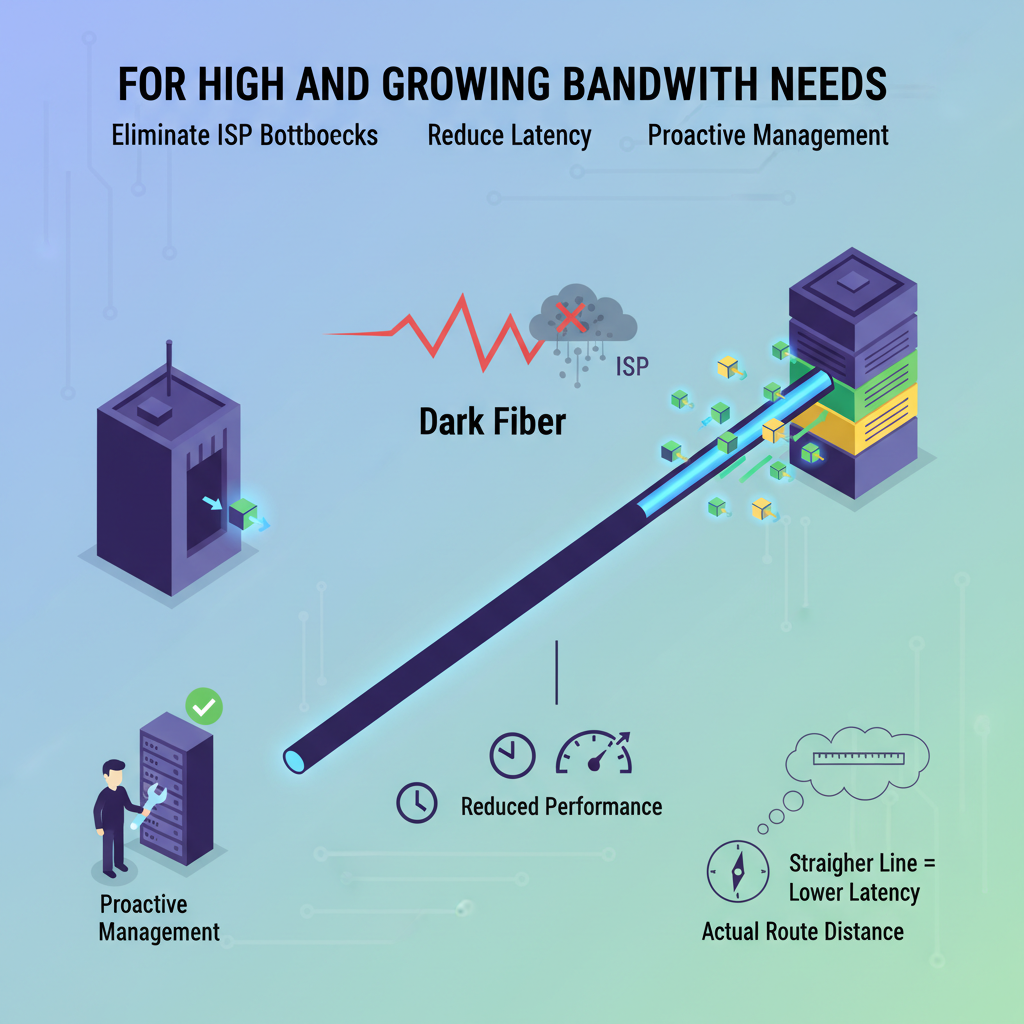
1. For High and Growing Bandwidth Needs
If your business is consistently pushing bandwidth limits, dark fiber provides a direct, unfiltered pipe for your data.
Eliminate ISP Bottlenecks: Avoid the throttling and congestion common on shared ISP networks.
Reduce Latency: Data travels the most direct path between points, speeding up transfer times and improving performance for latency-sensitive applications.
Proactive Management: Your IT team can identify and fix performance issues without waiting for an ISP technician.
Pro Tip: When evaluating a provider, always ask for the actual route distance between your sites. A straighter line means lower latency.
Eliminate ISP Bottlenecks: Avoid the throttling and congestion common on shared ISP networks.
Reduce Latency: Data travels the most direct path between points, speeding up transfer times and improving performance for latency-sensitive applications.
Proactive Management: Your IT team can identify and fix performance issues without waiting for an ISP technician.
Pro Tip: When evaluating a provider, always ask for the actual route distance between your sites. A straighter line means lower latency.
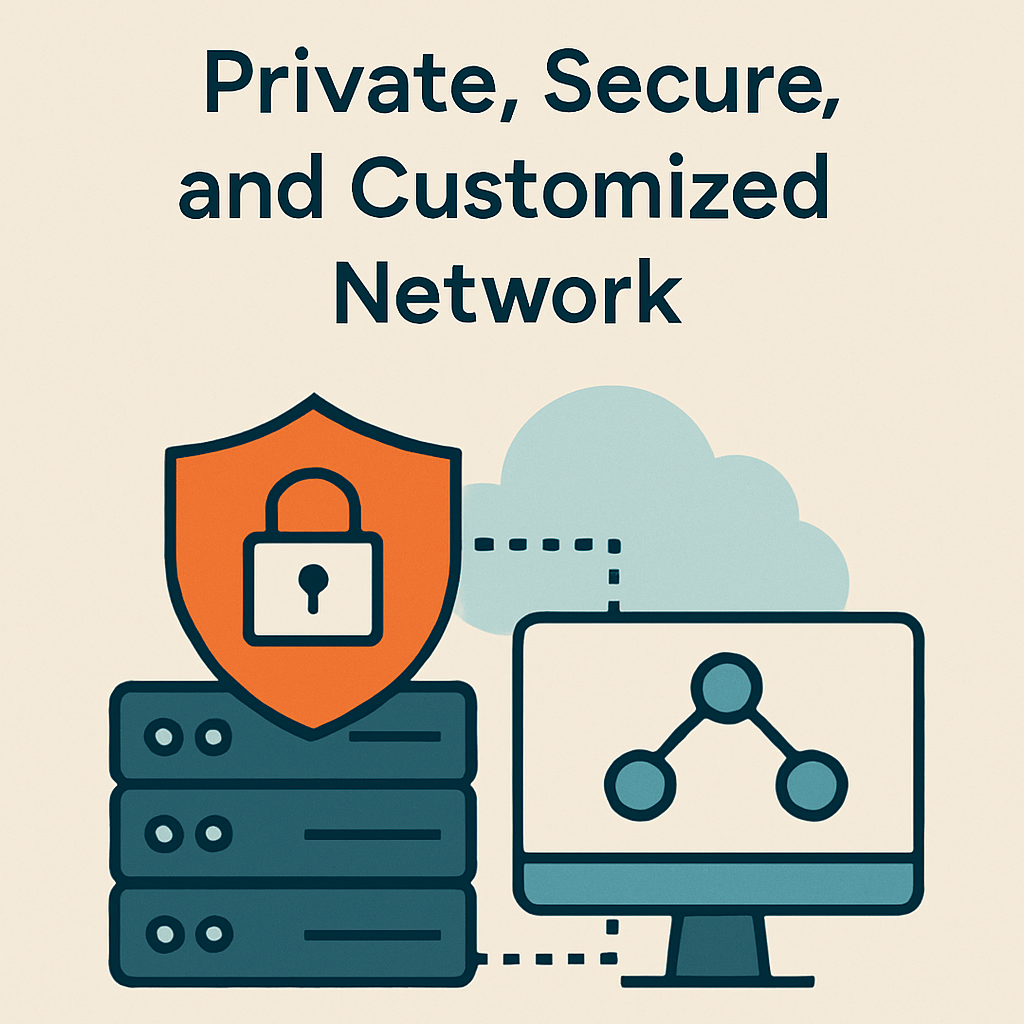
2. For Building a Private, Secure, and Customized Network
Control is a primary selling point. Dark fiber allows you to architect a private network tailored to your exact specifications.
• Enhanced Security: Your data never traverses the public internet, significantly reducing security risks. This is why universities, government institutions, and financial firms prefer it.
• Fine-Tuned Control: Directly manage network speed, latency, and protocols to meet specific application requirements.
• Enhanced Security: Your data never traverses the public internet, significantly reducing security risks. This is why universities, government institutions, and financial firms prefer it.
• Fine-Tuned Control: Directly manage network speed, latency, and protocols to meet specific application requirements.
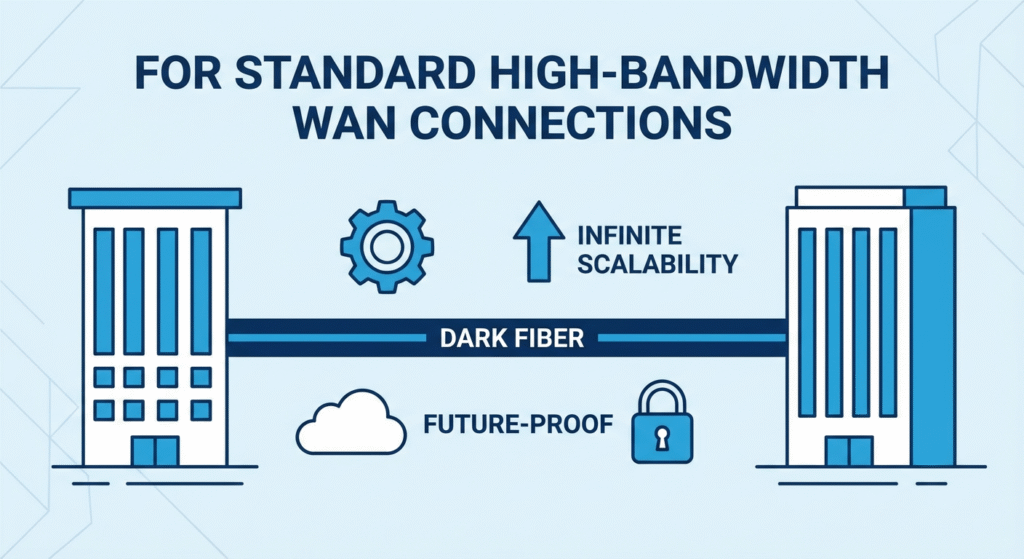
3. For Standard High-Bandwidth WAN Connections
Need to connect two buildings or a data center link with extreme performance?
• In major metro areas with abundant fiber, dark fiber is a future-proof option to replace traditional point-to-point or wave circuits.
• It offers infinite scalability, allowing your network to grow without upgrading your service contract.
• In major metro areas with abundant fiber, dark fiber is a future-proof option to replace traditional point-to-point or wave circuits.
• It offers infinite scalability, allowing your network to grow without upgrading your service contract.
The Pros and Cons of Dark Fiber
Before investing, it’s critical to weigh the advantages against the potential challenges.
Advantages of Dark Fiber
• Virtually Unlimited Bandwidth: The capacity of the fiber is only limited by the equipment you install on each end.
• Total Control and Customization: You own the network stack from top to bottom.
• Enhanced Security: A private network is inherently more secure than shared public infrastructure.
• Predictable, Long-Term Cost: While the initial investment is high, the flat-rate lease can be more cost-effective than escalating monthly ISP bills for high data volumes.
• Superior Performance: Enjoy the lowest possible latency and highest reliability.
Disadvantages of Dark Fiber
• High Upfront Cost: Leasing the strand and purchasing the necessary network equipment (transceivers, routers, etc.) requires significant capital.
• Requires Expert Management: Your team must have the technical expertise to design, maintain, and troubleshoot the network.
• Limited Availability: Access depends entirely on whether there is unused cable in your geographic area.
• Long-Term Commitment: Most dark fiber leases are multi-year contracts.
Is Dark Fiber Worth the Investment?
The dark fiber tipping point is often a simple calculation. Large organizations—including ISPs, municipalities, universities,
and data-centric enterprises—find that when their monthly bandwidth charges from a provider exceed the flat rate of a dark fiber lease, it becomes a financially sound decision.
Sometimes, the advantages of control, security, and performance justify the investment even sooner.
and data-centric enterprises—find that when their monthly bandwidth charges from a provider exceed the flat rate of a dark fiber lease, it becomes a financially sound decision.
Sometimes, the advantages of control, security, and performance justify the investment even sooner.
Ready to Unleash Your Network’s Potential?
The network potential is literally under your feet. For sophisticated users with high-bandwidth needs, dark fiber is a viable and powerful option.
Understanding your needs and the available options is the first step to making the best decision for your enterprise WAN.
Work with GOIP today to discover what WAN or dark fiber solutions are available for your business!