

In today’s cloud-first and remote-work world, businesses need a network that is both agile and secure.
For years, Software-Defined Wide Area Networking (SD-WAN) has been the gold standard for connecting branch offices.
For years, Software-Defined Wide Area Networking (SD-WAN) has been the gold standard for connecting branch offices.
But a new framework is taking center stage:
Secure Access Service Edge (SASE).
This guide breaks down what SASE is, how it works, and how it compares to SD-WAN to help you decide which is right for your business’s security and performance needs.
What is SASE (Secure Access Service Edge)?
SASE (pronounced “sassy”) is a cloud-native architecture that converges comprehensive networking and security functions into a single, unified service.
It delivers this service directly to users and devices, regardless of their location.
It delivers this service directly to users and devices, regardless of their location.
How SASE Works:
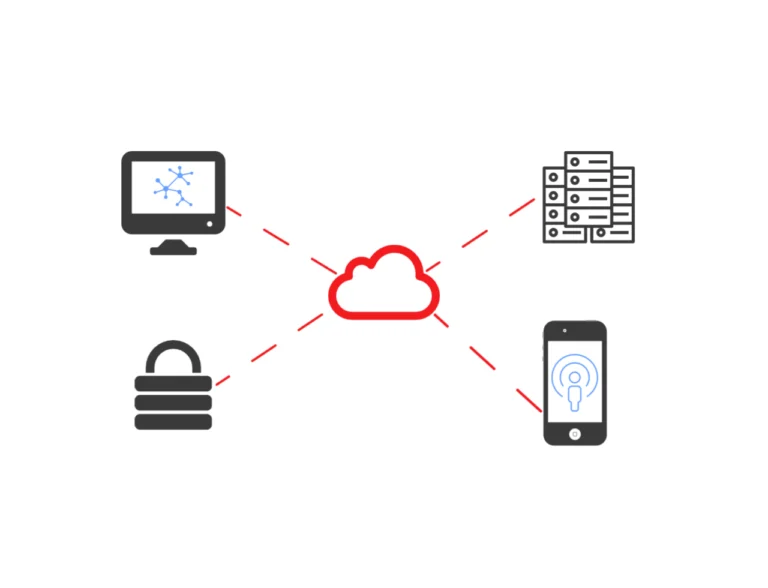
Instead of backhauling traffic through a centralized corporate data center for security checks — a process that creates latency — SASE leverages a globally distributed cloud network.
Users connect to a nearby Point of Presence (POP), where security policies are applied instantly.
This allows for direct, secure, and low-latency access to applications, whether they are in the cloud, the internet, or the corporate data center.
Users connect to a nearby Point of Presence (POP), where security policies are applied instantly.
This allows for direct, secure, and low-latency access to applications, whether they are in the cloud, the internet, or the corporate data center.
Understanding SD-WAN: The Foundation
SD-WAN is a proven technology that simplifies the management and operation of a wide area network.
It creates an intelligent overlay network that abstracts the underlying connections (the underlay).
It creates an intelligent overlay network that abstracts the underlying connections (the underlay).
How SD-WAN Works:
The Underlay Network:
This is the physical connectivity, often a combination of MPLS, broadband, LTE/5G, and other links, typically with redundancy.
The Overlay Network:
This software-defined layer creates an encrypted tunnel across all underlay connections. It intelligently routes traffic, prioritizes critical applications (like VoIP), and provides failover if a link fails.
While excellent for connecting fixed locations like branch offices, traditional SD-WAN focuses primarily on connectivity, with security often handled by a separate solution.
SASE vs. SD-WAN: Key Similarities and Differences
While both are software-defined overlays that connect geographically diverse sites, their core philosophies differ.
How They Are Similar:
Carrier Agnostic: Both allow you to choose the best internet carriers without being locked into a single provider.
Site Connectivity: They securely connect branch offices, retail locations, and data centers.
Centralized Control: Network-wide policies and changes can be managed from a single dashboard.
Application Awareness: Both provide Layer 7 visibility and control to prioritize critical applications.
Site Connectivity: They securely connect branch offices, retail locations, and data centers.
Centralized Control: Network-wide policies and changes can be managed from a single dashboard.
Application Awareness: Both provide Layer 7 visibility and control to prioritize critical applications.
How They Are Different:
The key difference is convergence.
SD-WAN is primarily a connectivity solution, while SASE is an integrated networking and security solution.
SD-WAN is primarily a connectivity solution, while SASE is an integrated networking and security solution.
| Feature | SD-WAN | SASE |
| Primary Focus | Intelligent branch connectivity and routing | Unified security and connectivity for all users & locations |
| Security Model | Often requires add-on security appliances or firewalls | Native and integrated (FWaaS, SWG, CASB, ZTNA) |
| Architecture | Appliance-centric at branch sites | Cloud-native and globally distributed |
| User Coverage | Ideal for connecting fixed branch offices | Ideal for branches and remote users anywhere |
| The “Middle Mile” | Optional; not all providers optimize this path | Standard; traffic is optimized and secured across the provider’s global network |
The SASE Advantage: Why Businesses Are Adopting It
1. Unified Security and Simplicity:
SASE bundles critical security services like Firewall as a Service (FWaaS), Secure Web Gateway (SWG), Zero-Trust Network Access (ZTNA), and more into a single platform.
This reduces complexity, eliminates security gaps, and cuts down on the number of vendors you need to manage.
This reduces complexity, eliminates security gaps, and cuts down on the number of vendors you need to manage.
2. Superior Performance for Cloud and Remote Work:
By providing direct-to-cloud access via a global network of POPs, SASE drastically reduces latency and improves application performance for cloud tools like Microsoft 365 and Salesforce, as well as for remote employees.
3. Reduced Costs and IT Burden:
As a cloud-based service, SASE requires less on-site hardware and simplifies IT management.
This lowers capital expenditures (CapEx) and operational expenditures (OpEx), freeing your team to focus on strategic initiatives.
This lowers capital expenditures (CapEx) and operational expenditures (OpEx), freeing your team to focus on strategic initiatives.
4. Built for a Remote-First World:
SASE seamlessly extends corporate-level security and network performance to every user, whether they are in a branch office, a coffee shop, or their home.
Is SASE Right for Your Business?
SASE is a powerful evolution, but it may not be for everyone.
Choose SD-WAN if: Your primary need is reliable, intelligent connectivity between fixed branch locations, and you have a mature, separate security stack you wish to maintain.
Choose SASE if: You want to consolidate your security and networking vendors, support a large remote workforce, and optimize performance for cloud applications while reducing management overhead.
Choose SASE if: You want to consolidate your security and networking vendors, support a large remote workforce, and optimize performance for cloud applications while reducing management overhead.
Ready to simplify your network and security?
The shift to SASE represents the future of secure access.
For organizations looking to enhance agility, strengthen security, and reduce costs, SASE offers a compelling path forward.
For organizations looking to enhance agility, strengthen security, and reduce costs, SASE offers a compelling path forward.
Need help navigating your network modernization journey?
[Contact our experts today] for a free consultation to see if SASE is the right fit for your business.